Ukrainian Olympian's ‘Helmet of Memory’ to become online museum for athletes killed in Russia's war

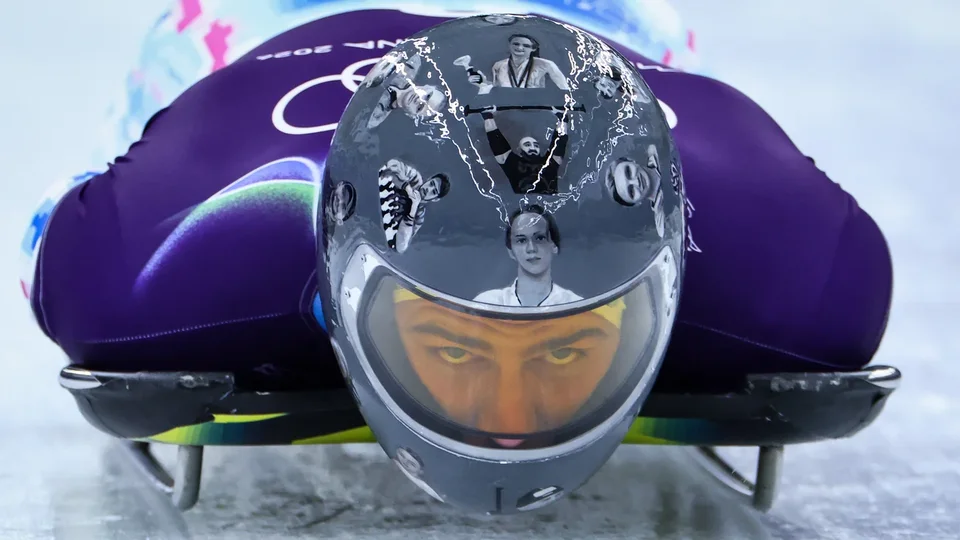
The helmet that Ukrainian skeleton racer Vladyslav Heraskevych wore to honor athletes killed in Russia's war - and that led to him being barred from competing at the 2026 Winter Olympics - will become the centerpiece of an online museum telling the stories of the 22 people depicted on it.
The project, called the “Helmet of Memory,” was announced by the Vladyslav Heraskevych Foundation and Ukraine's Memorial remembrance platform at the Molodvizh youth event in Lviv on Sept. 5.
The helmet, designed by Ukrainian artist Iryna Prots, features portraits of 22 Ukrainian athletes, both adults and children, who were killed as a result of Russia's aggression. They include Ukrainian service members killed while defending the country as well as civilians killed in Russian attacks.
Heraskevych brought the helmet to the 2026 Winter Olympics in Milan in February. He was barred from continuing to compete over the images of the killed Ukrainians and later had his accreditation revoked.
“There are things more important than medals. I stood up for what I believe in,” Heraskevych said at the time.
From 22 portraits to 22 stories
The new digital museum will be built around a 3D model of the helmet. Visitors will be able to select individual portraits and learn about the people behind them.
Journalists from the Memorial platform plan to interview the athletes' relatives, friends and colleagues and collect photographs, videos and personal memories. With families' consent, the team will also produce longer profiles about the athletes' lives, personalities, ambitions and achievements.
“We want the world to see real people behind the numbers of those killed - their achievements, their small and big dreams, what they loved and what they believed in,” the project team said.
“Every story here is an unfulfilled dream and a reminder of the high price of Ukraine's struggle for freedom.”
The website is being developed in Ukrainian and English so the athletes' stories can reach audiences both inside Ukraine and abroad. Materials will be added gradually.
The organizers plan to complete the online museum and formally present it on Feb. 12, 2027 — one year after Heraskevych was barred from competing at the Winter Olympics over the helmet.