
Ukraine-US peace talks end early amid fallout from Trump's Russian diesel deal

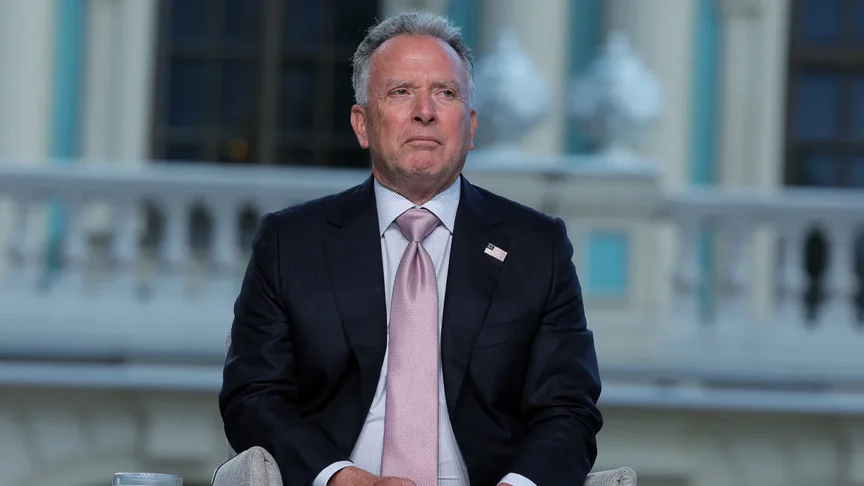
US-Ukraine peace talks in Miami ended earlier than planned, with no second day of negotiations, Radio Free Europe/Radio Liberty correspondent Alex Raufoglu reported on October 10, citing sources. The early conclusion came amid tensions over President Donald Trump's decision to ease restrictions on Russian diesel exports following a deal with Vladimir Putin.
"Miami talks concluded sooner than planned. 'No second day,'" Raufoglu wrote on X, citing sources. He did not specify why the negotiations ended early.
Trump's special envoy Steve Witkoff, meanwhile, described the discussions as constructive. He said representatives of the United States, Ukraine, three major European powers known as the E3, the European Commission, and NATO had discussed ways to de-escalate and end Russia's war against Ukraine ahead of winter.
The early conclusion followed Trump's announcement on October 9 that he had reached an agreement with Putin to bring Russian diesel back to US and global markets.
According to Axios, Trump made the deal after Ukrainian President Volodymyr Zelenskyy ignored at least six US requests to stop striking Russian oil refineries.
"Zelensky is misreading the room. By continuing to hit refineries, he is eroding the good will that he has built with Trump over the last six months," a US official with direct knowledge told Axios.
The official said Washington wanted Ukraine to halt the strikes unilaterally because they were contributing to higher fuel prices in the United States.
Zelenskyy had offered to stop attacking Russian refineries if Moscow also stopped striking Ukraine's power plants.
During eight hours of talks in Miami on October 9, Witkoff and Trump's son-in-law Jared Kushner told Ukrainian negotiators that Trump intended to speak with Putin and ease restrictions on Russian diesel exports, Axios reported.
A Ukrainian official told the outlet that the US envoys had threatened to cut off intelligence sharing if Kyiv continued its strikes. The US official denied that any such threat had been made.
The discussions also covered security guarantees for Ukraine, potential territorial arrangements, postwar reconstruction funding, rebuilding Ukraine's military, and its future relationship with NATO and the European Union.
Zelenskyy condemns Russian diesel deal
Following his call with Putin, Trump announced an agreement for Russia to supply approximately 4.8 million metric tons of diesel to US and global markets in several shipments.
The US Treasury subsequently issued General License No. 135, authorizing transactions involving Russian-origin diesel, including imports into the United States, through April 7, 2027. The license retains restrictions on certain transactions involving accounts held by Russia's central bank, National Wealth Fund, and Finance Ministry.
Zelenskyy condemned the decision as a sign of weakness that benefits Russia.
"Allowing Russia to sell petroleum products is an investment in a war that must be ended, not prolonged," he said.
He also criticized the timing of Trump's conversation with Putin, which took place while Ukrainian negotiators were in Florida discussing ways to end the war.
"I believe our team is simply being used as a cover. And that is certainly not fair, certainly not how partners should act," Zelenskyy told reporters.
The Ukrainian president reiterated that Kyiv was prepared to take reciprocal steps toward de-escalation, including halting strikes on Russian oil refineries if Moscow stopped attacking Ukraine's energy infrastructure.
Meanwhile, Putin did not commit to resuming peace negotiations during his 90-minute call with Trump, according to Kremlin foreign policy adviser Yuri Ushakov.
It remains unclear whether the dispute over Russian diesel directly contributed to the early conclusion of the Miami talks.
- Share: