
Voyager 1 stops sending data as it reaches historic one-light-day milestone

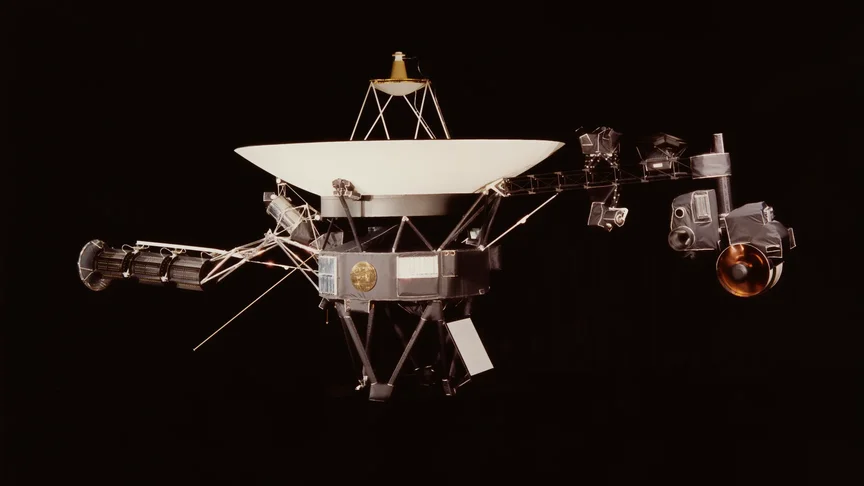
NASA engineers are investigating a technical issue aboard Voyager 1, the most distant human-made object in space, after the spacecraft stopped transmitting scientific and engineering data just days before reaching a historic milestone: one light-day from Earth.
The mission team became aware of the problem on November 14, when a NASA Deep Space Network antenna in Canberra, Australia, received a radio carrier signal from the spacecraft but no data, NASA reported.
The signal indicates that Voyager 1's antenna and transmission equipment are still functioning and that the spacecraft remains correctly oriented toward Earth.
Engineers suspect the problem may lie with an onboard computer responsible for collecting and formatting data for transmission.
Troubleshooting across 16 billion miles
Voyager 1 experienced a similar malfunction in 2023. NASA engineers successfully restored data transmission in 2024, and that experience is now informing their efforts to resolve the latest issue.
The team is also investigating whether the malfunction is connected to a communications outage in October, when NASA lost all contact with the spacecraft for approximately 48 hours before it resumed communication on its own.
At Voyager 1's current distance, a radio signal takes 24 hours to reach the spacecraft and another 24 hours to return to Earth. Diagnosing the problem could therefore take weeks or longer.
A milestone nearly half a century in the making
Launched in 1977, Voyager 1 reached a distance of one light-day from Earth — approximately 16.1 billion miles (25.9 billion kilometers) — on November 18, according to NASA's trajectory calculations.
It is the first human-made object to travel that far.
NASA said the technical malfunction would not affect the milestone, as the spacecraft is traveling at a consistent speed along a known trajectory.
Both Voyager probes have already operated far longer and delivered more scientific data than originally anticipated.
Although NASA acknowledges that unresolvable engineering problems will eventually bring both missions to an end, engineers intend to keep the spacecraft operating and collecting scientific data for as long as possible.
- Share: