
Serbia's election winners oppose sanctions on Russia, leave arms exports policy unclear (UPDATED)

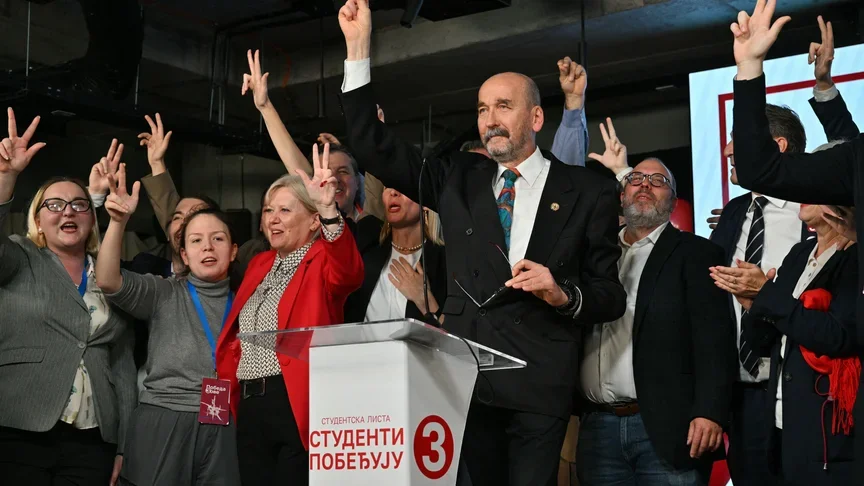
Serbia's student-led opposition movement, which won the October 25 parliamentary election, has said it does not plan to impose sanctions on Russia but has not clarified whether it would halt arms exports to conflict zones, including shipments that reach Ukraine through Western intermediaries.
According to Reuters, the Student List's leading candidates have outlined a cautious approach to foreign policy as they prepare to take power following the defeat of Aleksandar Vučić's ruling party.
The movement has said it does not intend to align with European Union sanctions against Russia over its invasion of Ukraine.
However, its leading candidates have not said whether a future government would halt Serbian arms exports to war zones, including sales to Western countries that subsequently transfer the weapons to Ukraine.
Reuters initially reported that the movement intended to halt such exports but subsequently corrected its article to clarify that the candidates had not announced a position on the issue.
The movement has not yet named the leaders of its future government.
Energy dependence on Russia
Serbia remains heavily dependent on Russian energy supplies.
Russia's Gazprom supplies approximately 2.2 billion cubic meters of natural gas to Serbia annually at below-market prices, according to Reuters.
The Student List has described that relationship as an acute economic dependency rather than a geopolitical alignment.
Serbia also faces uncertainty over its oil supplies as it awaits the sale of Russia's stake in NIS, the company operating the country's only oil refinery, to Hungary's MOL. The incoming government would depend on continued US sanctions waivers to maintain crude oil imports during the transition.
A change of government, but not necessarily foreign policy
The Student List's election victory ended the long rule of Vučić, whose government maintained relations with both Moscow and Kyiv.
During the campaign, the movement largely avoided divisive foreign policy questions, focusing instead on corruption, democratic reforms and economic concerns.
Its candidates have also maintained that Kosovo, which declared independence in 2008, remains part of Serbia — a position that complicates Belgrade's ambitions to join the EU.
European Commission President Ursula von der Leyen welcomed the prospect of reforms following the election and said the bloc was ready to work with Serbia on the rule of law, media freedom and its European future.
The Student List's position on sanctions suggests that Serbia's change of government may not bring an immediate shift in its policy toward Russia. Its approach to arms exports that indirectly supply Ukraine remains unclear.
Correction (October 27, 2026): An earlier version of this article stated that Serbia's Student List had pledged to halt arms exports to conflict zones, including weapons reaching Ukraine through Western intermediaries. That claim was based on a Reuters report that the agency subsequently corrected. The Student List's leading candidates have not stated whether a future government would end such exports. The headline and article have been updated to reflect this correction.
- Share: