
‘I sent them drawings as a kid — now kids send them to me’: War through the eyes of a teen and a veteran


On February 24, 2022, Yaroslav Kravchuk, director and coach of the children's and youth sports school in Greco-Roman wrestling, woke up at 5 a.m. He made some tea. He yawned. The night before, he had been to the bathhouse with his students: it is the best place to restore tired muscles.
Aviation was buzzing outside the window. I thought: probably night training at a military airfield near his native Zhytomyr.
Suddenly, a call came from an old comrade, the commander of one of the combat brigades: "It's started!".
“Pack a bag,” the 51-year-old Yaroslav told his wife to wake her. She was not surprised because her husband had fought in the Anti-Terrorist Operation and had never hidden that if an invasion began, he would go again. Even though he had a deferment, like the rest of the instructors.
“I do not recall the words she used to see me off, but there was nothing joyful in them. Now when I hear ‘Let those who want to go to war go,’ I answer this way: in all these years I have not met a single person who wants to go to war. With curses, with ruined plans we went, because we knew: the Muscovites do not just want to change a flag. They are pushing in here to destroy everything,” Yaroslav explains his motivation.
By 8:30 a.m. Yaroslav, father of two sons and a carp fishing enthusiast, was already at the military enlistment office. He waited there for the guys he had gone through the ATO with. They had agreed in advance: as soon as Russia attacked, they would gather and go fight.
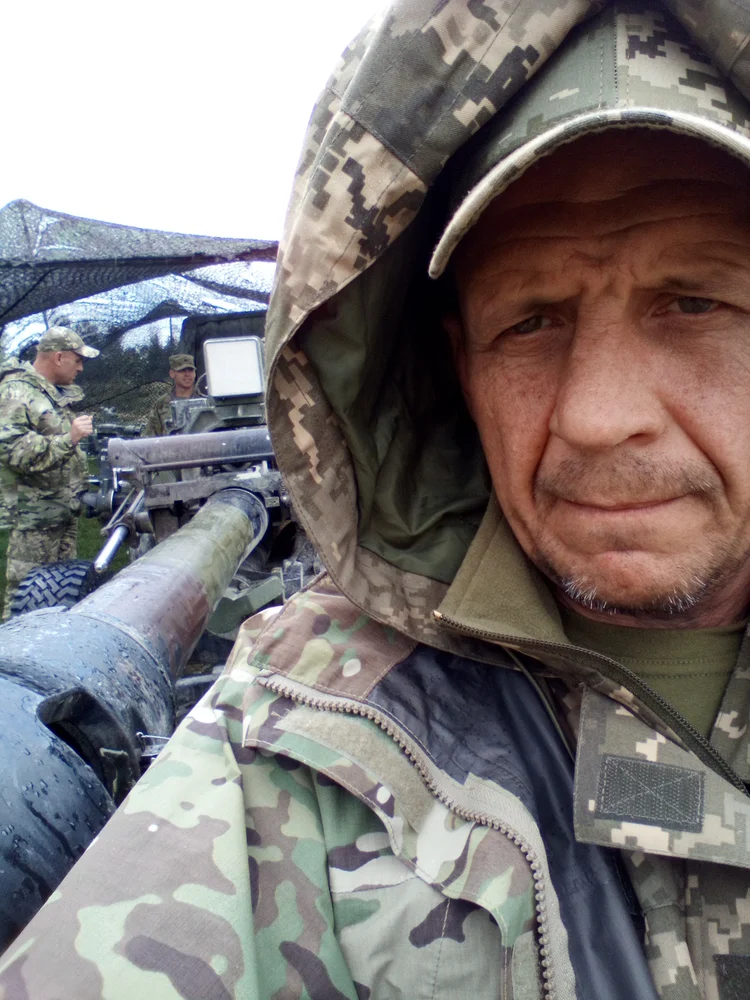


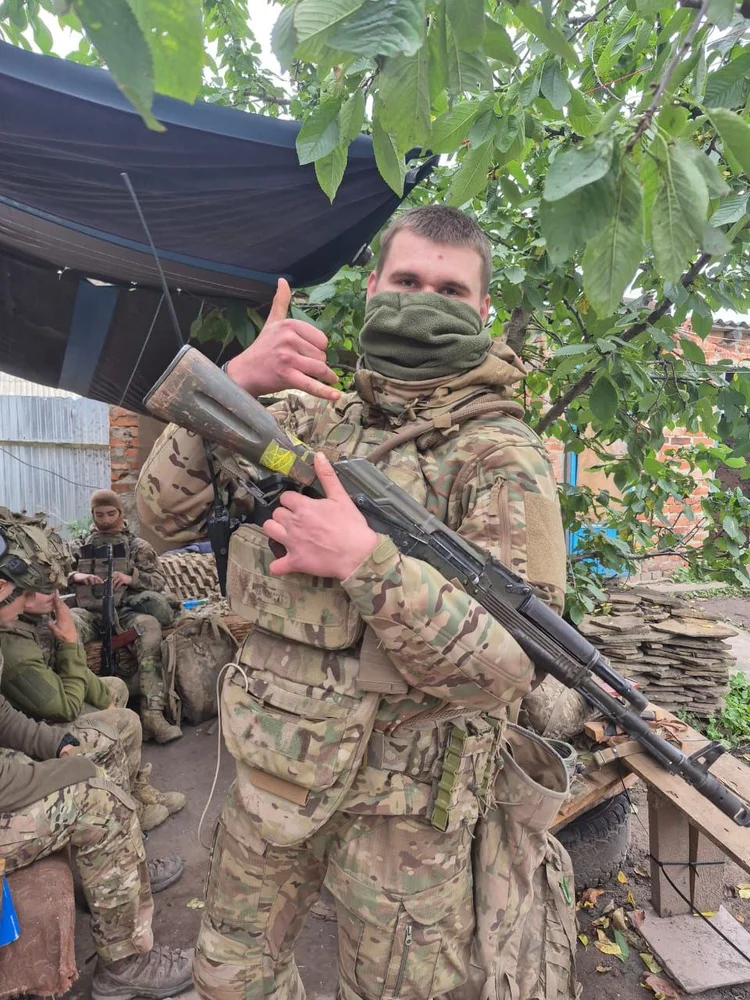
- Yaroslav Kravchuk fought in the ATOProvided to hromadske
- Yaroslav Kravchuk fought in the ATOProvided to hromadske
- Yaroslav Kravchuk fought in the ATOProvided to hromadske
- Yaroslav Kravchuk fought in the ATOProvided to hromadske
Yaroslav called each one. No one picked up at first, but later they called back: “We received weapons, we are joining territorial defense.” They knew: if they joined him, they would end up in the 25th, 95th, or 30th brigade, which would find themselves at the epicenter of events as the most combat-ready units.
Kravchuk got angry: “In territorial defense you can slip through. I told them then that I would hold each one accountable when the chance came. And the results would show, including on their faces.”
That evening of the 24th, he was already in the 2nd battalion of the 95th brigade — dressed, shod, armed. And he went to carry out his first task: at one of the military airfields, they were waiting for an enemy airborne landing.
***
Meanwhile, in a village in Rivne Oblast at 5:30 a.m. on the 24th, grandma went to wake her grandson:
“Dimko, it’s war outside!”
“Wow!” he exclaimed. “Let’s turn on the television.”
15-year-old Dima Kovalchuk was an ordinary boy. He loved playing soccer with the guys, going fishing and mushroom-picking, and lived with his mom, grandma, and two brothers. The oldest had served in the ATO at one time. They called him that morning: “Andriukha, come back!” And he went.
For the schoolboy, the day passed in news, Telegram channels, and chatting with friends. Several classmates’ parents wanted to send them abroad, but they dug in: one was staying, another did not want to, and we are not going. Only one girl was taken out.
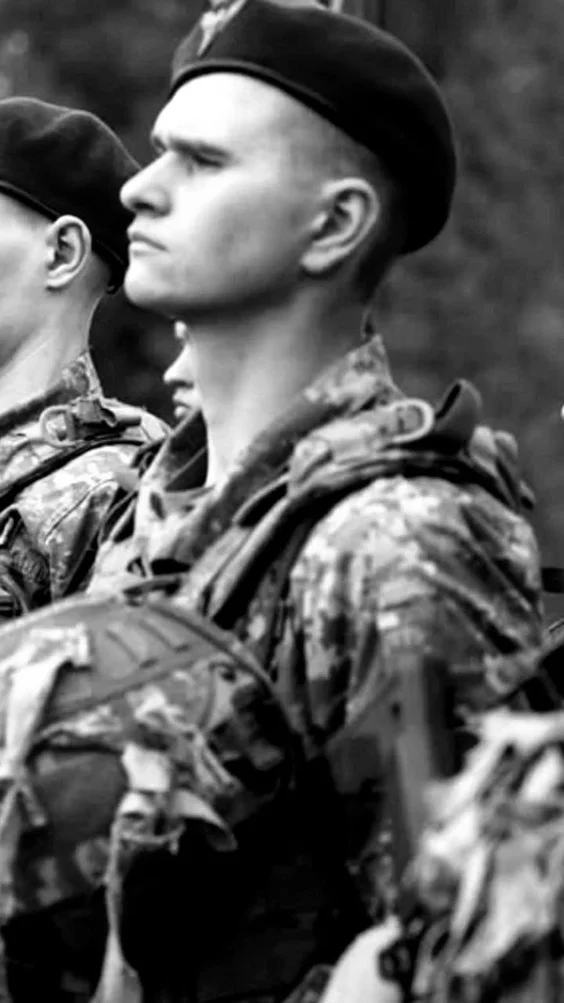
That day, we lost contact with the older brother, and Mom began to worry.
“But I knew that everything would be fine with Andriy, because he knows military affairs and would get out of any trouble safe and sound. There was not even a thought that he might be wounded or something worse. And that is how it turned out,” Dmytro says.
The brother let them know he was okay that evening: all good, carrying out a task. In the end, the brother fought for two years, was discharged due to health problems. Now he is home.
First months: 200 mortar shells launched every day
In the first days of the full-scale war, Yaroslav Kravchuk stopped a fellow rifleman from shooting at our helicopter, which he mistook for an enemy one in the fog. He slapped him on the shoulder, and the shot missed the helicopter. Yaroslav was praised. One of the guys found a major’s epaulette, jokingly attached it. That is how the call sign Major stuck to him.
The first months of the invasion were the hardest for Yaroslav in all four years.
“Spring 2022. The Slovyansk–Izium highway. The Muscovites were tearing toward it. And if they had succeeded, the entire Ukrainian grouping in Donbas would have been fully encircled. Our battalion covered the infantry near the village of Dovhenke. It was unknown what was happening around. No Starlinks. Information came with delays somehow.
We knew only what was to our right and left. Artillery was nonexistent because there were no shells, and tanks — exactly two, and one was hidden. All our battalion had to fight with were three mortars. We fired 200 shells per day — that is very high intensity,” he recalls that time.
The Ukrainian fighters managed to hold the position, though no one relieved them. For four months, the enemy did not advance a single meter. Yaroslav says that to make it happen, he and his brothers-in-arms pushed themselves to the absolute limit.
ATO experience is nothing compared to the full-scale invasion. His friends who went through April–June 2022 agree that neither before nor after did they face such intensity of fighting. And what awaited them was no picnic: Serebrianka forest, Kharkiv operation, defense of Kupyansk, Kursk operation. They joke that those were a resort for them.
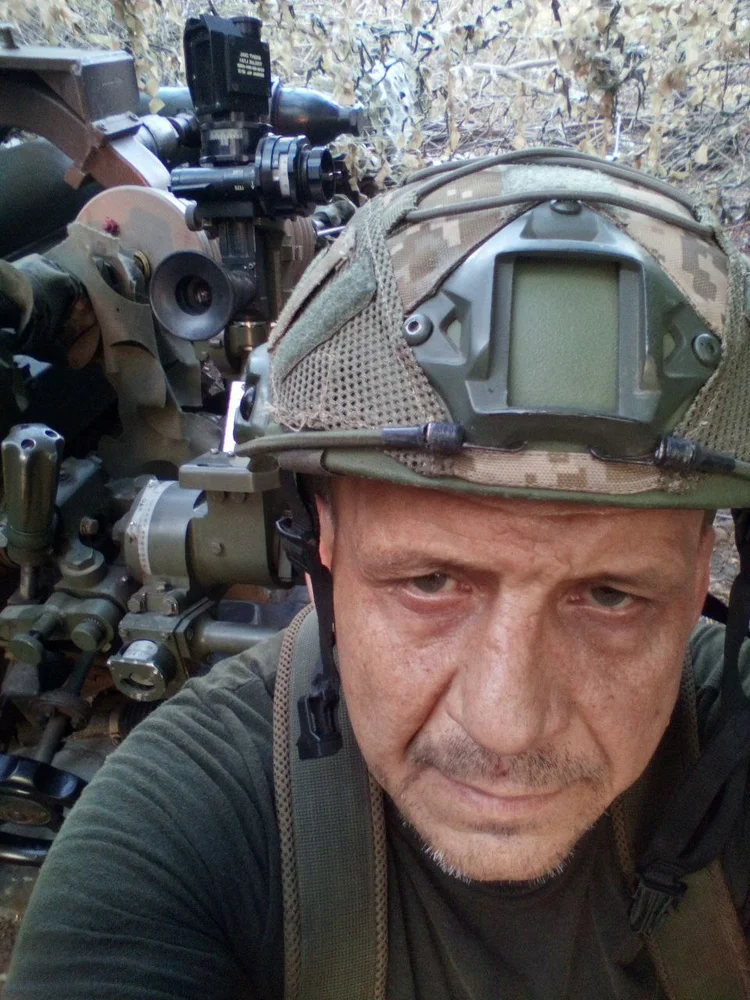


- Yaroslav Kravchuk knew he would go to war even before the full-scale invasionProvided to hromadske
- Yaroslav Kravchuk knew he would go to war even before the full-scale invasionProvided to hromadske
***
In the first weeks of the full-scale war in Rivne Oblast, guys build checkpoints, but they do not take Dima because he is small. In the evenings, he walks through the village with friends: total darkness, pitch-black. It feels as if everyone has died out — people were so afraid of airstrikes. And airstrikes did happen — though later and not in the village: somewhere infrastructure and military units were hit, somewhere in Rivne. They learned about it from the news.
Dima did not delve much into the war's chronology: at school and among themselves, 15-year-olds did not discuss such things much. He remembers when the Russians retreated from Bucha, and the truth about the torture of civilians came out.
“But what shocked me most about the war was the looting by our own people, who rummaged through smashed stores, empty houses, carrying stuff out,” he recalls. “I saw videos of them being caught, tied to poles. And harsh aggression toward the enemy arose in me when they cut off the genitals of our prisoners, executed them. I remember some guy, before being shot, lit a cigarette and shouted: ‘Glory to Ukraine!’” (referring to Oleksandr Matsiyevskyi, killed on March 6, 2023 — ed.).
The young man was finishing school, and the idea slowly took root in his mind: he would enlist. He wanted to be among the best. But he didn’t share his plans with anyone.
After graduating, he went to Poland to work, where he picked apples. In November 2024, he turned 18. The day before his birthday, he submitted an application to his dream unit, Azov. They called back immediately: “You want to join us? Come for an interview.” He passed it successfully. And then the question that turned everything upside down for him: “Do your parents know you want to serve? They need to know.”
Dmytro backed off. He didn’t want to worry his mother.
Recruiters from different brigades competed for him, but he chose the 95th. When they asked if his family knew, he didn’t hesitate: “They do."
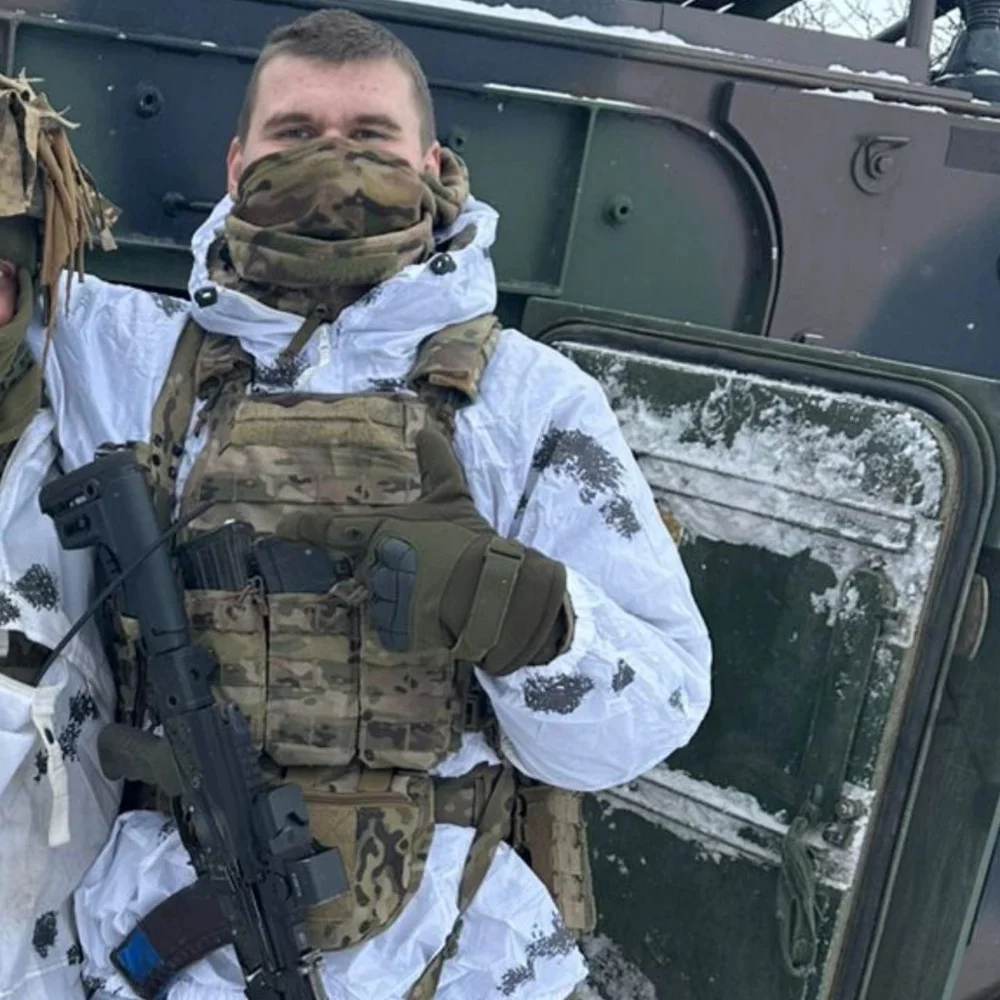
Around the same time, information appeared about the “18–24” contract, which, according to the Ministry of Defense’s plan, was meant to encourage young people under 25 to join the Armed Forces. So the young man volunteered to sign it for a year.
The family learned he was serving in the military from TikTok. Some channel filmed a story about the first contract soldiers going through training. And Dmytro appeared on camera.
“We thought you were in Poland,” his brother said during a call.
“Nah, that is not me, that is someone who looks like me!”
“Mom recognized you.”
“Well, okay, it is me, and so what?”
Mom cried. She worried about one son, and now about another: “Why do you need that army? You have not seen life yet.”
“But I do not regret it,” Dmytro says. He was given the call sign “Bliednyi” (‘Pale’).
Now he is 19, and for a year he has been carrying out the hardest tasks in the 13th Separate Air Assault Battalion of the 95th Brigade.
A lot seems cool and interesting to him: going by map into a tree line, then discovering on site that it is a bare clearing. Sitting in a position where the enemy is right in front, and nothing separates you. Letting them get closer and “popping” them. He finds it interesting to overcome unpredictable difficulties and test himself.
There are also painful moments: losing brothers-in-arms.
What the war taught, what they learned about themselves
Major is convinced: though he is an athlete, at war physical fitness takes second place. The main thing is to endure everything psychologically.
His first squad commander during the battles for Dovhenke taped a bag to a bicycle with duct tape and fled, leaving the fighters.
“And we ourselves chose him as commander in 2022, as the most experienced. And indeed he created the illusion that you could rely on him.
We live in wonderful times: all masks are off, you see perfectly who is who. For example: guys from the village whose brightest life experience was how they got drunk young, could not stand up and fought at the disco sitting on their asses. But at war, when everything around whistles and flies, they do everything as needed. And someone — so experienced, such a tough cookie — gets on a bike, betrays his own. At war you see everyone’s true nature, here you cannot pretend to be someone else,” Yaroslav Kravchuk concludes.
About himself over these four years he understood that he will survive anywhere if there is the slightest chance, and also complete the task. He is convinced this is the experience of that terrible spring of 2022.
“I know that responsibility toward people is very strong in me. At the end of last summer, I was delivering artillery ammo to a position, two canisters of gasoline for generators. A drone flew into our vehicle from behind, my rifle burned, radio, the whole vehicle. I jumped out, got away with bruises. And then guilt tormented me before the unit. Because of me we lost transport,” he recounts.
Yaroslav called members of the Zhytomyr Oblast Council. They chipped in together with the governor for another vehicle. A week later, he was driving to the position again, and he worried more about the vehicle than about himself.
The war gave him friends — even more than friends. These people with whom he became so close, fused into one whole called the word “brothers-in-arms.”
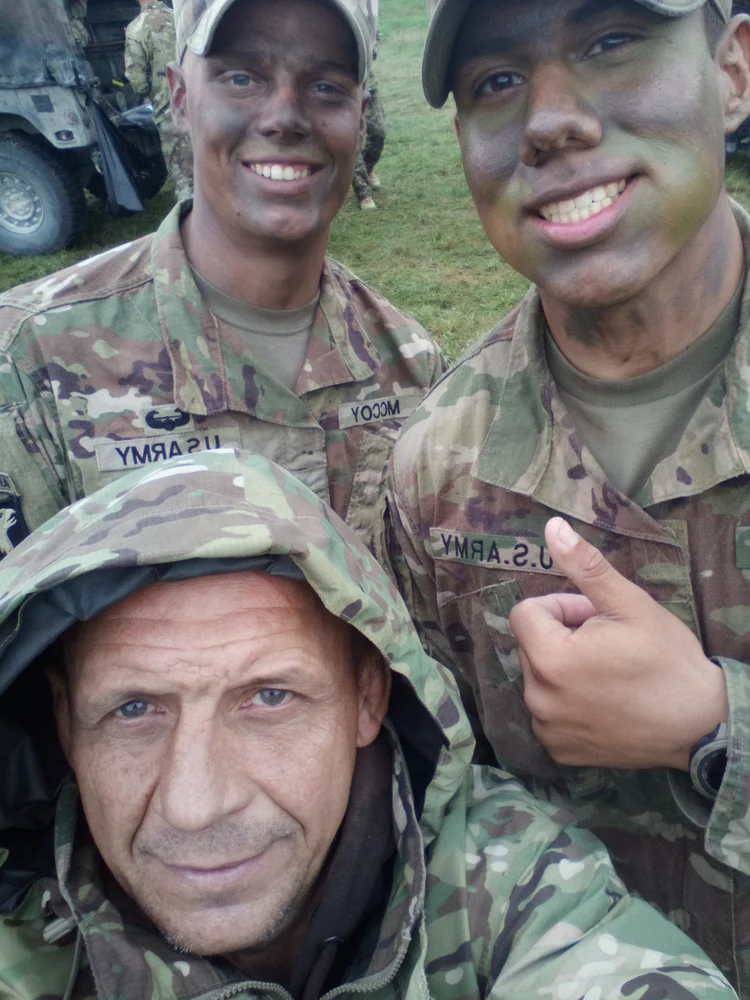


- Yaroslav Kravchuk, call sign MajorProvided to hromadske
- Yaroslav Kravchuk, call sign MajorProvided to hromadske
- Yaroslav Kravchuk, call sign MajorProvided to hromadske
***
Dmytro once spent 34 days at a position in Sumy Oblast. He says he really craved something sweet. A Snickers bar was divided in two and savored all day, getting a kick out of it.
One day, he dashed out to gather plums, which he knew were sweet because the same kind grew at home. And he saw a package in the field, and a drone next to it.
“So this was a care package for us, it got shot down. I think: risk it and grab it — or not worth it. I understand there is water, food — and I did make that dash, about ten meters into the field. I open it, and there are six bottles of water, and all intact! I rush into the dugout: ‘Living it up!’ At that moment, I realized: you have to value everything. At war, the meaning of life changes,” he recalls.
When they “were rolled back” — ordered to leave the position — he made it to the house where he lived with his guys. Dirty, covered in blood, because on the way, one fighter was wounded and he carried him out on his back. Barely standing on his feet. He enters the yard, and there are strangers. And he wanted to get to his own so much to tell them everything.
“But where the hell are those I started with, went through training, signed contracts? Gone… Already washed, in the evening I sat in the yard. Birds singing, everything around intact, beautiful all around. Again, I thought: you have to value every moment! And pull everyone into this, so they cherish life.”
Dmytro also realized that he became more responsible during the war. Especially when it comes to training newcomers.
“People’s survival depends on these skills. And if we send an untrained one to the front, consider that we betrayed him,” he says.
His dream came true — at war, he is among the best. He met such friendship, such support, such shoulder-to-shoulder feeling that he had never had before.
Of his classmates, he is the only one serving; almost no one writes to him, asks how he is. And he already has nothing to talk about with those who did not fight. But with real friends he met in the last year, he is constantly in touch. Even if they are far away.
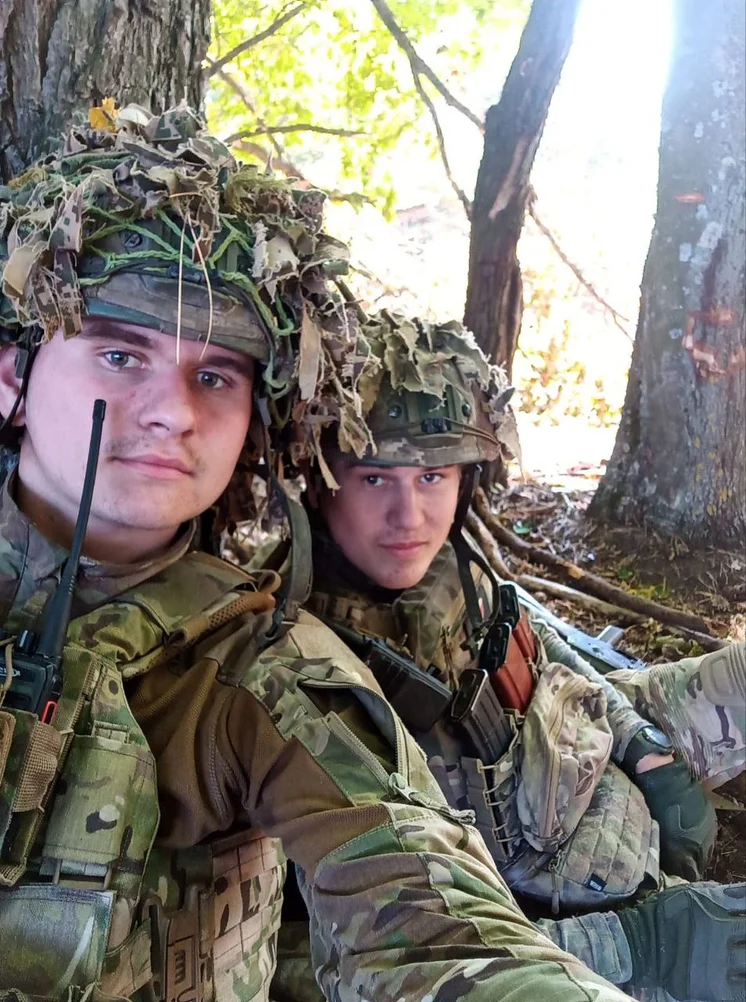
Older - younger
Yaroslav Kravchuk is now 55. There are few like him here. It’s mostly men over 40 and young ones.
He thinks about the advantages of the latter this way: “They are more adapted to digital technologies. Nimbler, better health, more enduring in extreme conditions, more effective. They still lack a sense of fear; they think they are immortal, that death is something distant.
I remember being young, though it was the 1990s, and I lived it to the fullest. Time of hopes, never giving up, sometimes woke up in blood because I fought someone the night before, but I knew it was temporary.”
As for combat experience, he does not think older ones have more. All newcomers are gradually introduced to the squad and sent on tasks with experienced members. And after half a year, a young fighter can do what took the older ones years.
Dmytro Kovalchuk agrees with him: “Take a man at 40 and at 20 — huge difference. We get along better with phones, catch new information on the fly. And an older one you have to tell and show five times.
Precisely, life experience plays no role in war, because here there is no time to think about family, wife, child. Older ones have all that, and they fear more. And young ones have nothing to lose. Here, there is you, brother-in-arms, enemy, danger.”
What gives strength?
Yaroslav Kravchuk remembers well how, instead of fairy tales in childhood, his great-grandmother and grandmother told stories about being exiled to Siberia, beyond Lake Baikal, in the 1930s. Dekulakized because the family had two cows. Transported in freight cars. They returned to Ukraine in 1954.
“In her arms was my little mom, born in Irkutsk Oblast, and her older brother. Soon, he died of meningitis. So the history of my family shows what the adventures and power of Muscovites in Ukraine ended with.
I went to stop them. And when it is very hard, I remember my relatives or go to the graves, and it becomes easier because we are doing everything right. I tell them: ‘Sleep peacefully,’” he says.
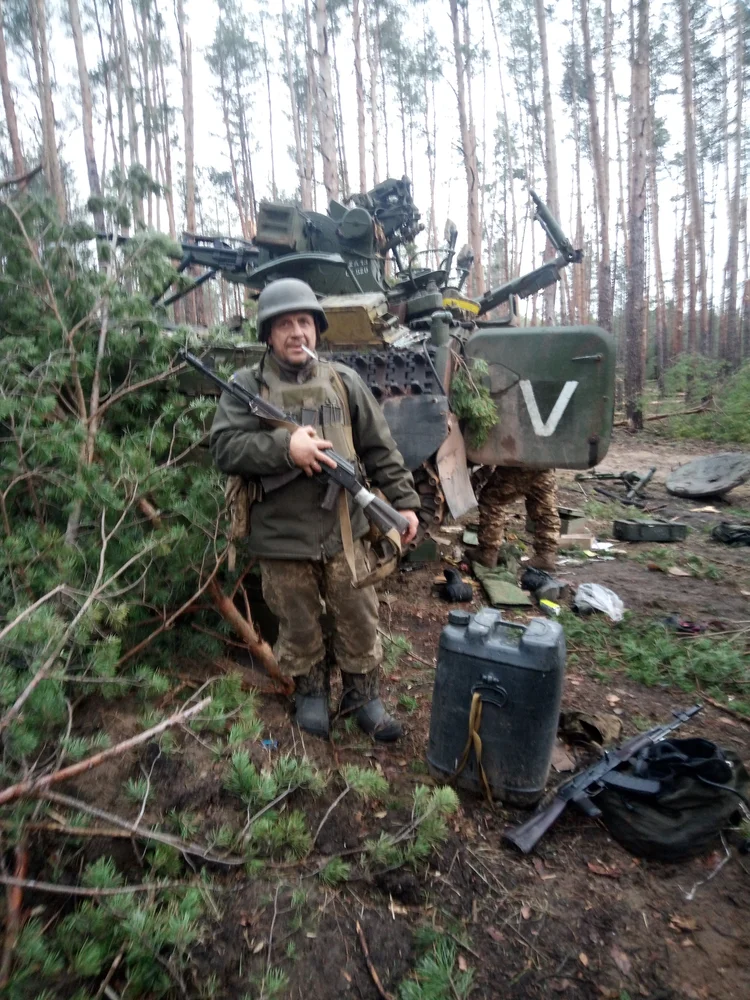


- Yaroslav KravchukProvided to hromadske
- Yaroslav KravchukProvided to hromadske
***
Dmytro Kovalchuk was making his way out of the position he had held for over a month. He trudged with leaden legs across a large cornfield. Unexploded mines everywhere, and he repeated: “Lord, save and preserve.” He felt he would not stay here, that God would lead him out. A fellow soldier stepped on a “petal,” it shattered his bone, a drone hunted them, but the guys got out.
“I wanted to call mom so much,” Dmytro recalls. The young fighter who did not take leave because war is cool felt what power mom gives. Mom who waits, who prays for him.
What after the war?
Even now, coach Yaroslav Kravchuk finds time to run the school remotely and hold competitions. He says that in four years, four students died: Dmytro Konov (b. 1984), Ruslan Richko (b. 1977), Oleksandr Zahurskyi (b. 1988), and Andriy Yaremenko (b. 1999). All were candidates for master of sports.
Major dreams to train at least three Olympic champions after the war ends.
“And pride in myself will come when we finish all this business. And finish it well,” he says.
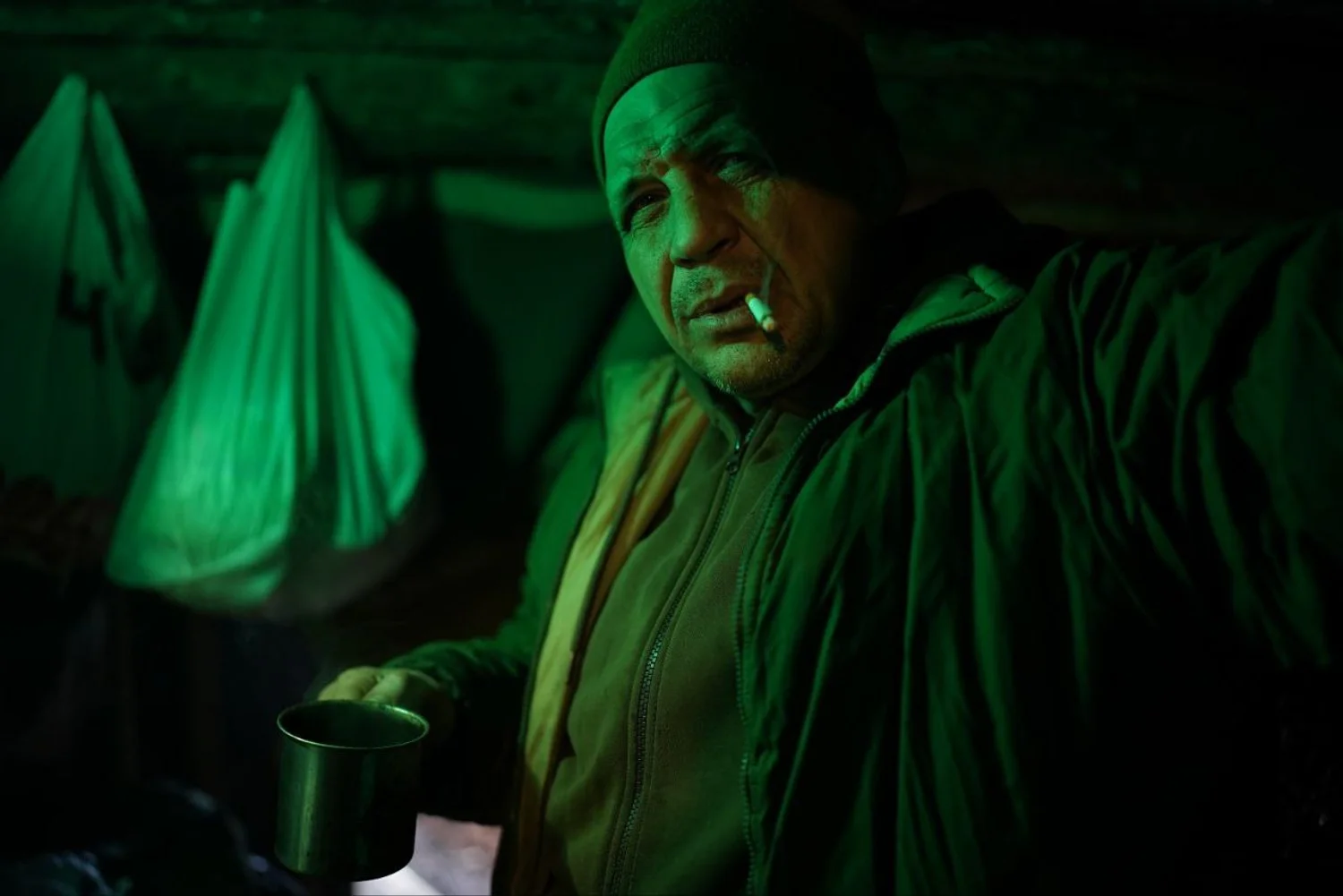
Dmytro Kovalchuk’s one-year contract ends on March 13, but he will extend it. He would like to stay in service even after the war, to improve the army.
At the end of the conversation, he recalls: “In sixth or seventh grade, we drew pictures and sent them to soldiers. And back then, I never thought that children would also send drawings to me, an 18-year-old. And this gives strength; it is pleasant. I really want today’s sixth-graders not to have to send them anymore. That is why we are here.”
The report was created with the support of RLNE.
- Share: