
‘We have no mandate’: Ukraine’s Oleshky crisis exposes limits of UN response


Thousands of civilians remain trapped in Russian-occupied Oleshky in southern Ukraine, facing severe shortages of food and medicine while efforts to secure a humanitarian evacuation have stalled. An investigation by hromadske in Geneva found that UN bodies tasked with documenting human rights violations have limited powers to provide immediate assistance.
Oleshky, a town in Kherson Oblast near the front line, has been under Russian occupation since 2022. Ukrainian officials estimate that more than 6,000 people, including approximately 200 children, may remain in the town and surrounding area.
Regular food deliveries reportedly stopped in late May 2026. Minefields and restrictions imposed by Russian forces make leaving the area extremely dangerous.
Russia blocks evacuation effort
Ukraine is prepared to evacuate civilians, and the International Committee of the Red Cross has made the necessary preparations, according to Yevhenii Tsymbaliuk, Ukraine’s permanent representative to the UN Office in Geneva.

Tsymbaliuk told hromadske that the ICRC contacts Russian representatives twice a week seeking permission to establish a humanitarian corridor but is repeatedly refused.
Ukraine has also raised the issue through diplomatic contacts involving US and Russian representatives, he said.
With ground access blocked, Ukrainian forces have used drones to deliver food, medicine and supplies to residents. One delivery operation brought approximately four metric tons of aid in nearly 400 packages.
A humanitarian emergency meets institutional limits
Hromadske raised the crisis with several UN bodies during a reporting visit to Geneva.
Representatives of the Independent International Commission of Inquiry on Ukraine explained that their mandate is to investigate violations and preserve evidence, not organize humanitarian operations. Information about Oleshky could be included in the commission’s next report, scheduled for March 2027.
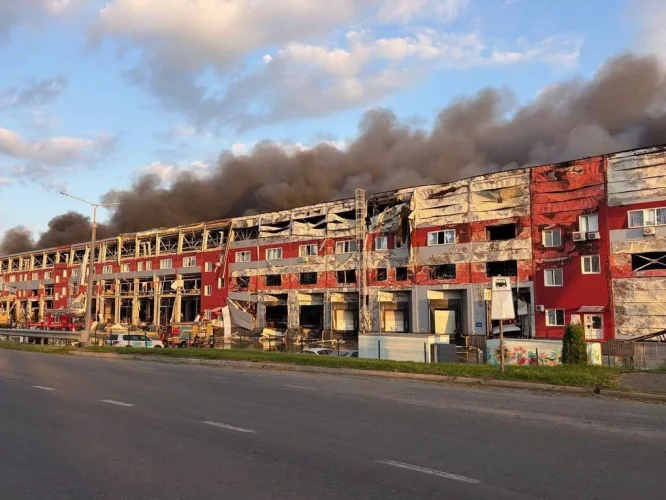
When journalists emphasized that civilians needed help immediately, a commission member pointed to the possibility of expedited investigations, citing a special response to atrocities committed in Bucha in 2022. However, the commission itself has no authority to deliver aid.
The Office of the UN High Commissioner for Human Rights (OHCHR) likewise focuses on monitoring and documenting violations. Its representatives directed hromadske to the UN Office for the Coordination of Humanitarian Affairs (OCHA), which coordinates emergency humanitarian responses.

OCHA had not responded to hromadske’s request by the time the investigation was published.
These divisions reflect the UN system’s specialized mandates, but they also highlight the difficulty of securing immediate assistance for civilians trapped in territory controlled by a party refusing humanitarian access.

European Parliament vice president begins hunger strike
On Oct. 20, European Parliament Vice President Pina Picierno announced a hunger strike to draw international attention to the situation in Oleshky.
“Thousands of people are trapped in territory occupied by the Russian army, without regular access to food and medicine,” she wrote on X.
Picierno called for an immediate humanitarian ceasefire, access to essential supplies and safe evacuation routes for civilians. She also urged organizations, institutions and individuals to join her protest.
The crisis has renewed questions about the UN’s ability to respond to emergencies during armed conflicts, particularly when a permanent member of its Security Council is itself a party to the war.
Russia retains veto power in the Security Council, although that power does not directly determine the mandates of every UN humanitarian or human rights body.
For civilians in Oleshky, the immediate obstacle remains the absence of safe, agreed humanitarian access.
- Share: