
‘It’s the devil launching the missiles, not Russia’: Inside Ukraine’s battle over a monastery’s ties to Moscow


As Ukraine moves to sever one of its most important Orthodox monasteries’ institutional ties to the Russian Orthodox Church, hromadske traveled to the Pochaiv Lavra to see how the dispute is playing out on the ground - among pilgrims, clergy and the centuries-old religious complex itself.
The Ukrainian authorities say the Pochaiv Lavra remains formally affiliated with the Russian Orthodox Church and have ordered it to eliminate those ties. The monastery has been given additional time to comply, while worship continues and pilgrims still arrive at the sprawling complex in western Ukraine.
When hromadske visited Pochaiv, however, the institutional dispute was only part of the story. Some of the pilgrims we met voiced views of Russia and its war against Ukraine that have persisted here for years.
A war of missiles - and beliefs:
what some pilgrims believe about Russia’s war
“It is the devil launching these missiles. It is not them, not Russia,” Maria, a woman from Ternopil Oblast, told hromadske when asked about Russian attacks on Ukrainian religious sites. “The devil has taken over the world because faith has weakened.”
It was not the first time hromadske had encountered such views in Pochaiv. During a visit three years ago, some elderly women similarly denied Russia’s responsibility for attacks, saying the missiles were being launched by God as punishment because Ukraine had grown proud and separated itself from Russia. Some even described Russian President Vladimir Putin as their ruler.
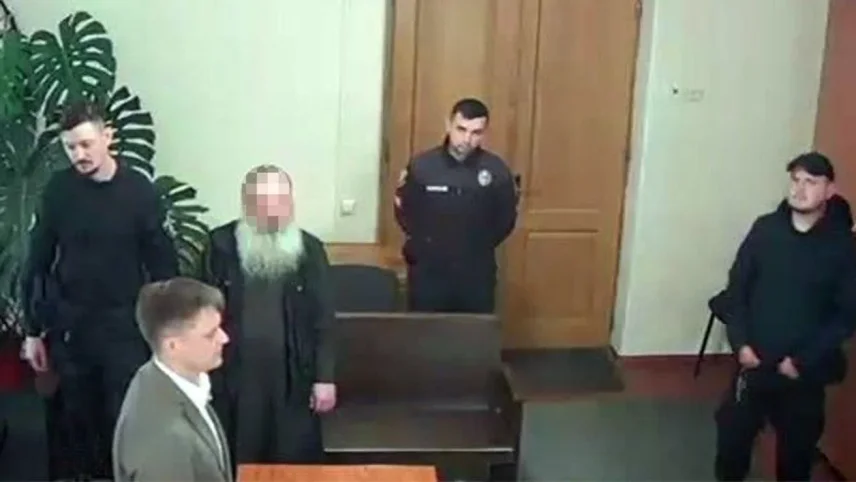
After that report was published, the head of the Pochaiv Lavra, Metropolitan Volodymyr Moroz, accused hromadske of staging a provocation and suggested that some of the people interviewed might have been planted.
This time, however, hromadske again encountered pilgrims expressing views that closely echoed Russian narratives about Ukraine and the war.
“There once was a triune Rus: Great Rus, White Rus and Little Rus,” said Sevastian, a monk visiting from Odesa. “When Ukraine was joined to Russia, there was a single union. Russia took it in, raised it, fed the snake. And now it is fighting it.”
Another pilgrim, Pavlo from Vinnytsia Oblast, described the war as spiritual rather than political and blamed a decline in religious faith. He also repeated claims commonly promoted by Russian propaganda, including that the United States had turned Ukraine into a “testing ground” for new technologies — among them ID cards containing “chips.”
Antisemitic conspiracy theories also surfaced. Sevastian claimed the war would not have happened if Ukraine had a president with a traditionally Ukrainian Christian name rather than Zelenskyy, and used an antisemitic slur while alleging that the president sought money from the United States and Europe partly for personal enrichment.
Such statements by individual visitors, however, do not in themselves demonstrate that these views are promoted by the Pochaiv Lavra. Previous cases have raised separate concerns: in 2023, a novice associated with the monastery was sentenced to five years in prison for praising Russia’s political and military leadership and denigrating Ukrainian troops on social media. Later that year, Ukraine’s Security Service searched the monastery as part of an investigation into incitement of ethnic and religious hatred following a publication that disparaged Jews and members of other denominations and questioned Ukraine’s existence as a sovereign state separate from Russia.
A bureaucratic battle over ties to Moscow
Ukraine’s effort to sever the Pochaiv Lavra’s ties to Moscow rests not on the views expressed by pilgrims but on the monastery’s formal institutional connections to the Russian Orthodox Church.
The Pochaiv Lavra is part of the Kyiv Metropolitanate of the Ukrainian Orthodox Church, which Ukraine’s State Service for Ethnic Policy and Freedom of Conscience formally recognized as affiliated with the Russian Orthodox Church in 2025. The agency also points to the monastery’s head, Metropolitan Volodymyr Moroz, who remains a member of the Russian Orthodox Church’s Bishops’ Council.

To comply with the state order, Moroz would have to leave the Russian church’s governing body, while the Pochaiv Lavra would have to leave the Kyiv Metropolitanate.
The monastery was initially given one month to sever those links. After the deadline expired, its lawyers requested another two months, saying a monastic council had to be convened before the Lavra could leave the metropolitanate. The state agency granted a 60-day extension.
The lawyers also argued that they needed a Ukrainian translation of a screenshot from the Russian Orthodox Church’s official website listing Moroz as a member of its Bishops’ Council - because the page was in Russian.
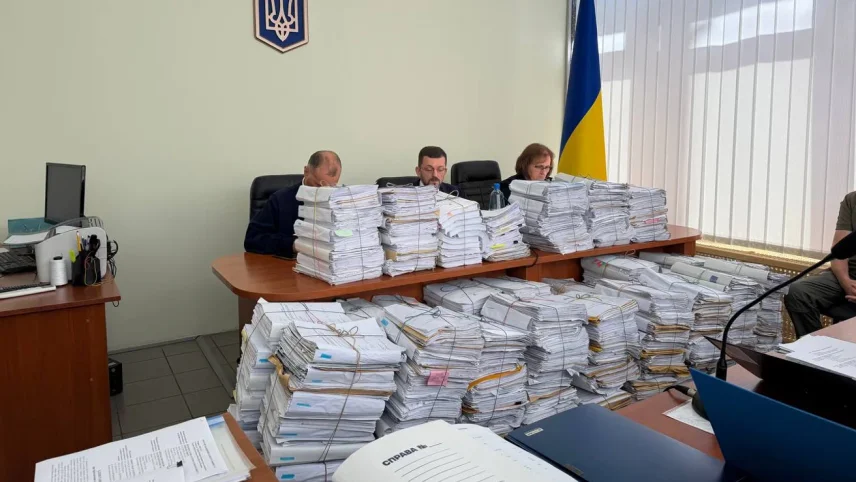
If the monastery ultimately fails to sever the ties, the state agency says it can go to court seeking to halt the religious organization’s activities. Any such legal battle, however, could take years. Similar proceedings involving the Kyiv Metropolitanate have already become bogged down in litigation.
Faith, property - and a missing icon
The dispute over the Pochaiv Lavra is not only about church jurisdiction. It also involves land, historic buildings and religious artifacts accumulated over centuries - and questions over what would happen to them if the monastery’s current arrangements were terminated.
Ukraine’s Culture Ministry has been inventorying the Lavra’s property and buildings, a process that officials say has repeatedly been obstructed by the monastery’s current occupants. The inspection found a number of alleged violations, including unauthorized alterations to historic buildings and several missing icons.
Among them is An Angel Gives Communion to St. Onuphrius, an icon dating to 1807.
“We didn’t find it,” Vasyl Ilchyshyn, director of the state reserve that manages the historic complex, told hromadske. “They say it wasn’t there. How could it not have been there if it is listed in the 2014 records? There is even a photograph of it in its place.”

The Lavra has previously challenged the legality of the inventory, arguing that some religious objects being catalogued were never formally transferred to the monastery by the state and had always belonged to the religious community.
That distinction matters because of a legal ambiguity dating back to the 1990s. When the state granted the monastery use of the Pochaiv Lavra, the agreement covered the buildings but did not clearly account for relics, icons, liturgical objects and other historic valuables kept inside them.
As Metropolitan Nestor of the Orthodox Church of Ukraine explained to hromadske in an earlier interview, ending the agreement could theoretically allow the current occupants to return the buildings while claiming the contents as their own.
“They could say: We are returning what we received according to the documents - the premises,” Nestor said. “But the relics, icons, liturgical vessels and historical treasures accumulated over centuries of the Lavra’s existence - they would have the right to take those away.”
Officials have also documented alterations to the nationally protected complex that they say were carried out without approval, including new religious murals, changes to walls inside historic buildings and work on the facade of the Assumption Cathedral. A criminal investigation has been opened over some of the alleged violations.
What’s next?
For all the institutional, legal and property disputes surrounding the Pochaiv Lavra, many local residents hromadske spoke to did not see the monastery’s denominational affiliation as the defining issue.
Some said they would continue coming even if the Lavra eventually transferred to the Orthodox Church of Ukraine.
“We come here not to a denomination, but to God,” one local resident said.
For many of the people who pray here, the question of who formally controls the Pochaiv Lavra may ultimately matter less than the Lavra itself.
- Share: