
Security or transparency? Ukraine debates restoring asset declarations for intelligence officers


How can a country at war scrutinize the wealth of its security and intelligence officials without endangering those working undercover?
Ukraine's parliament is considering legislation to restore mandatory asset declarations for security and intelligence personnel who have benefited from wartime exemptions.
The initiative comes amid Operation Carthage, a major anti-corruption investigation into alleged links between law enforcement officials and organized crime.
While there is broad support for restoring financial oversight, lawmakers disagree on who should be allowed to see the declarations. Some advocate public disclosure, while others argue that access should be restricted to anti-corruption authorities.
Hromadske examines what the proposed legislation would change, where the security concerns lie and why restoring financial disclosure may be only the first step toward greater accountability.
How wartime exemptions created an oversight gap
Following Russia's full-scale invasion in 2022, Ukraine relaxed financial disclosure requirements for public officials and military personnel.
The changes reflected the realities of wartime: active hostilities, displacement, threats to military personnel and limited access to documents.
Ukraine restored electronic asset declarations in September 2023. However, certain categories of military personnel retained the right to postpone filing their declarations until 90 days after the end of martial law or their discharge from service.
In practice, this meant that some employees of the Security Service of Ukraine (SBU), including personnel performing administrative, logistical and support functions, remained outside the regular financial disclosure system.
On November 9, 2026, President Volodymyr Zelenskyy submitted an urgent bill to parliament seeking to address this gap.
The proposed amendments to Ukraine's Law on Prevention of Corruption distinguish between military personnel directly involved in combat operations and those whose duties do not involve combat.
Under the proposal:
- Personnel directly involved in combat would retain the right to postpone filing declarations until 90 days after their combat participation ends, their discharge from service or the lifting of martial law.
- Other personnel would be subject to regular financial disclosure requirements.
- Military personnel required to file outstanding declarations for periods after 2021 would have 90 days from the law's entry into force to do so.
The bill also allows security and intelligence officers' declarations to be withheld from public access when disclosure could endanger them. Once that threat no longer exists, the declarations would become publicly accessible.
Operation Carthage: What prompted the change?
The catalyst for renewed scrutiny was Operation Carthage, an investigation by the National Anti-Corruption Bureau of Ukraine (NABU) and the Specialized Anti-Corruption Prosecutor's Office (SAPO).
Investigators uncovered alleged schemes involving officials from the Prosecutor General's Office, the National Police and the SBU providing protection for fraudulent call centers, drug trafficking and other illegal businesses.
The release of intercepted conversations involving suspects drew public attention to the wealth of security officials and the mechanisms available to scrutinize its origins.
One of the suspects, SBU Major General Serhii Duka, was questioned about his assets during a parliamentary investigative commission hearing.
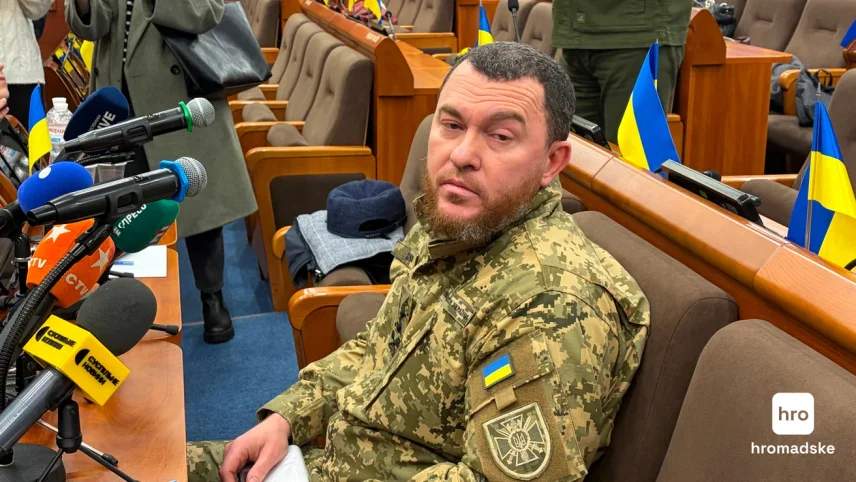
Asked about the house where he had been detained and his financial disclosure obligations, Duka replied:
“I don't file declarations. Once the requirement is introduced, I'll file everything and disclose everything.”
Data compiled by Opendatabot, a Ukrainian public records monitoring service, using information from the National Agency on Corruption Prevention (NACP), provides some indication of the scale of restricted financial information.
As of mid-November 2026, 1,399 asset declarations mentioning the SBU were withheld from public access, covering at least 1,012 individuals.
Of those, 384 concerned the 2023 reporting year, 224 concerned 2024 and 38 concerned 2025.
These figures do not mean that all the declarations belong to current SBU employees or that the restrictions lack legitimate security grounds. According to Opendatabot, SBU employees account for only 0.3% of all declarations withheld from public access nationwide.
The issue also has implications for Ukraine's European integration.
In its 2026 report on Ukraine's progress, the European Commission stressed the need to strengthen the country's asset declaration system to prevent corruption more effectively and identify unexplained wealth.
At the same time, transparency does not require disclosing information that could expose intelligence officers' identities, addresses or operational methods.
The challenge is to protect personnel facing genuine security threats without creating a category of officials whose wealth cannot be effectively scrutinized.
The security service's position
Ahead of parliamentary consideration of the bill, SBU representatives were invited to present their position to parliament's Anti-Corruption Policy Committee.
NABU Director Semen Kryvonos and SAPO chief Oleksandr Klymenko had previously alleged that SBU chief of staff Oleh Holovash was lobbying lawmakers against the legislation.
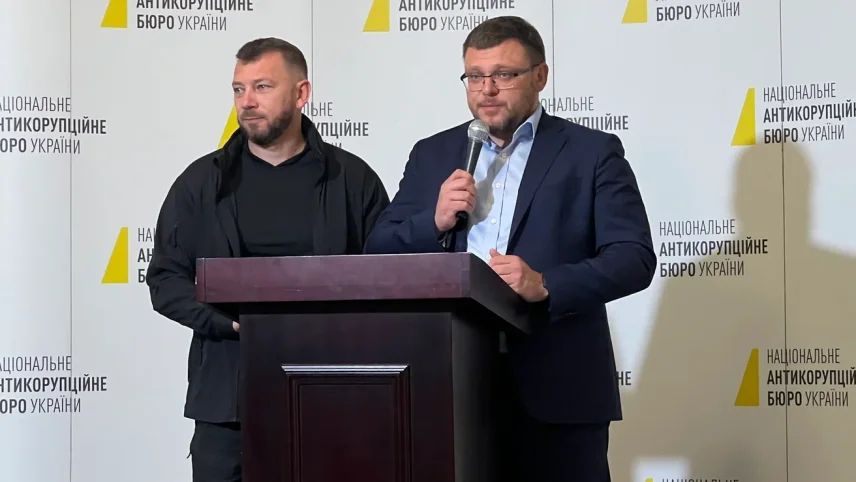
However, lawmakers interviewed by hromadske said SBU representatives had not approached them with requests to oppose the bill.
At an open committee meeting on November 24, Holovash personally assured lawmakers that the SBU supported restoring financial oversight.
He also pointed to the agency's internal security department, which is responsible for combating corruption and other offenses within the service.
Nevertheless, Holovash said the SBU was preparing proposed amendments ahead of the bill's second reading.
The agency is particularly concerned that the expanded disclosure requirements could affect personnel engaged in counterintelligence operations, potentially endangering their safety and lives.
Representatives of Ukraine's military intelligence agency, NABU and the Defense Ministry also broadly supported the presidential bill, although each institution raised its own concerns.
Who should be allowed to see the declarations?
The main disagreement among lawmakers concerns public access to financial disclosures rather than the obligation to file them.
Fedir Venislavskyi, a lawmaker from Zelenskyy's Servant of the People party and a member of parliament's National Security Committee, advocates creating a restricted section of the asset declaration registry accessible only to the National Agency on Corruption Prevention.
Such an arrangement would restore formal financial oversight while keeping sensitive information out of the public domain.
However, it would also prevent journalists and civil society organizations from independently examining officials' assets, comparing their wealth with declared income and identifying potential discrepancies.
Other lawmakers argue that public scrutiny is an essential component of effective anti-corruption oversight.
Yaroslav Zhelezniak, a lawmaker from the opposition Holos (Voice) party, told hromadske that the public should have access to at least general information about the assets and lifestyles of SBU employees who are not engaged in combat operations.
“There's nothing terrible about it. They should be made public,” he said.
Zhelezniak argues that exemptions should protect those genuinely involved in combat rather than individuals who use their security service status to conceal illegal business activities.
Volodymyr Viatrovych, a lawmaker from the opposition European Solidarity party, said restoring asset declarations alone would not be sufficient.
“Corruption, even during wartime, is eating away at an institution as important as the Security Service. This is a threat to the state, and Russia undoubtedly exploits it.”
Viatrovych also pointed to the need for broader institutional reforms, including changes to the SBU and the State Bureau of Investigation, as well as the adoption of an anti-corruption strategy.
Financial disclosure is only the first step
Anti-corruption experts expect lawmakers and law enforcement agencies to seek changes to the legislation before its second reading.
Kateryna Ryzhenko, deputy executive director for legal affairs at Transparency International Ukraine, said lawmakers needed to substantially revise the bill, address its shortcomings and restore financial disclosure requirements for everyone not engaged in combat.
Yurii Nikolov, editor and co-founder of the investigative journalism outlet Nashi Hroshi (Our Money), was more skeptical, describing the current proposal as an attempt to create the appearance of a response.
In his view, the corruption practices uncovered by NABU were enabled not by the absence of public asset declarations alone, but by impunity and tolerance of such practices by the country's leadership.
When accountability becomes an information battleground
Operation Carthage has also revived narratives portraying Ukraine's law enforcement and anti-corruption agencies as being locked in an institutional struggle.
Hromadske's media monitoring identified claims that NABU was using the investigation to take revenge on the SBU, or that restoring public asset declarations would automatically endanger all security service employees.
The security risks facing undercover officers and counterintelligence personnel are real. However, they do not explain why the same restrictions should necessarily apply to employees performing administrative or logistical duties.
Another narrative portrays criticism of the SBU in connection with anti-corruption investigations as part of a Russian information operation.
The SBU has previously warned that Russia exploits genuine corruption investigations to undermine public trust in Ukrainian institutions.
But the exploitation of such investigations by Russian propaganda does not make journalistic scrutiny or demands for institutional accountability hostile activities.
The proposed legislation still requires final parliamentary approval and the president's signature before it can enter into force. Its provisions may change substantially in the meantime.
Operation Carthage has highlighted the dangers posed by alleged corruption networks within Ukraine's law enforcement institutions.
Parliament must now determine whether restoring asset declarations will provide an effective instrument of accountability while protecting those who face genuine security threats - or whether the resulting compromise will leave some of the most important financial information beyond public scrutiny.
- Share: